I founded Domy Innovations Cafe in 2012 to do good work on interesting problems, with the freedom to decide how they should be solved. It grew from a design practice into a multidisciplinary company working with 225+ businesses. Along the way, I learned to build the organisation behind the products.
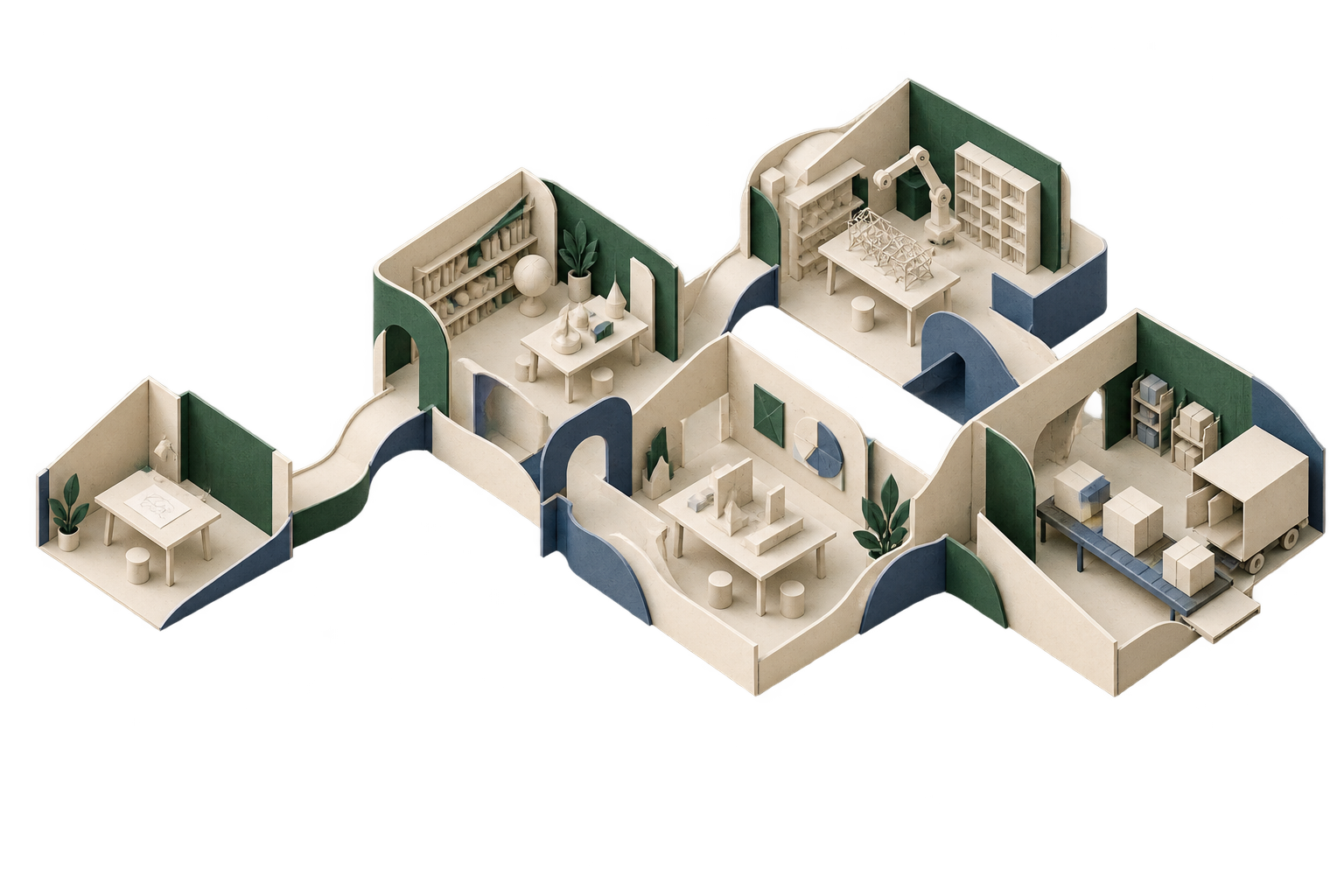
I wanted the freedom to solve the whole problem.
At Hewlett-Packard, I had learned about Human-Computer Interaction, research, usability and designing for different kinds of users. I had also seen how intelligent people and sophisticated processes could coexist with difficulty making meaningful change.
I wanted more agency. I started Domy in March 2012 and committed to it full-time in April 2013. Starting a company gave me freedom, along with responsibility for what happened next.
The work didn’t end when the screens were designed.
Clients brought us problems that needed research, UX strategy, design, front-end development, engineering, delivery and measurement.
“Here’s the design. Someone else can build it” stopped feeling like a satisfactory answer. So we added capability. I hired designers, developers and managers, and eventually a CTO as customers increasingly wanted us to take responsibility for complete digital products.
I wasn’t just designing products anymore. I was building the organisation that built them.
Culture couldn’t depend on me being in the room.
When a company is small, culture can masquerade as proximity. You hear conversations, notice when someone is struggling and walk over to help. As we grew, that stopped being enough.
We introduced quarterly surveys, performance reviews and career-development conversations. I spent time coaching managers. I wanted people to know where they stood, where they could grow and who was responsible for helping them get there.
More than 50 designers passed through Domy over its history. I couldn’t personally develop everyone. I needed to build people who could help other people grow.
The company could do more than I could.
Our customers included Zerodha and Upstox. We worked with businesses in India, the United States, Israel and Germany. Some needed UX expertise alongside their engineering teams; others needed help turning an idea into a product.
Sometimes research revealed that the brief wasn’t the real problem. At Zerodha, a website brief led us to questions of trust.
Increasingly, I wasn’t producing the final design. Work that once depended on me happened without me in the room. That was evidence the company was beginning to work.
Building the company taught me what I wanted to build next.
Domy became known particularly well in financial technology. Referrals kept the pipeline full, and the agency was growing. But the problems were becoming repetitive, while running the business increasingly demanded attention to sales pipelines, utilisation and forecasting.
I realised that building an organisation and wanting to operate that organisation indefinitely were different things. Eventually, I closed Domy. It was a difficult decision, with years of work and an identity tied to the company.
Domy taught me to build beyond my own ability: to hire expertise, develop managers and create ways of working that didn’t depend on my presence. I carried those lessons into FYERS, where the organisation itself became part of what I designed.
Read the Zerodha story